



 4.7
4.7




ChatGPT App Info


Introduction
ChatGPT is powered by OpenAI's GPT (Generative Pretrained Transformer) architecture and trained on a large dataset of diverse internet text. It has the ability to understand and generate coherent responses to a wide range of user inquiries. ChatGPT can be used for various applications, including chatbots, virtual assistants, and conversational agents.
One of the key strengths of ChatGPT is its ability to provide informative and contextually relevant responses. By analyzing the input query, it can generate meaningful and accurate answers or suggestions. However, it's important to note that ChatGPT does not possess general knowledge or real-time information beyond what it has been trained on.
While ChatGPT is designed to simulate human-like conversation, there may be instances where its responses are incorrect, nonsensical, or biased. OpenAI has implemented safety protocols to mitigate harmful or inappropriate responses, but it may still occasionally produce unexpected or flawed outputs.
To use ChatGPT effectively, it's important to provide clear and specific instructions. Breaking down complex queries into simpler sub-questions can help improve the accuracy and relevance of the responses. OpenAI encourages feedback from users to continue improving and refining the model over time.
Features of ChatGPT
 Natural Language Understanding
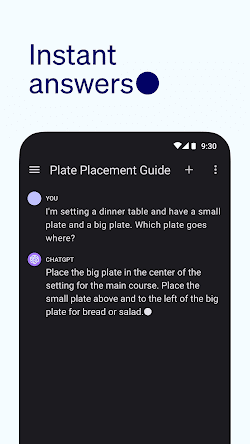
ChatGPT excels in understanding and interpreting natural language input. It can comprehend complex queries, grasp context, and identify the intent behind user questions. This enables it to generate responses that are contextually relevant and meaningful, mimicking human-like conversation.
Contextual Responses
ChatGPT leverages its large-scale training on diverse internet text to generate responses that incorporate relevant information from the given context. It takes into account the preceding conversation or prompt to generate coherent and context-aware replies. This allows for more fluid and engaging conversations with the model.
Highlights of ChatGPT
 Conversation Continuity
ChatGPT is designed to maintain conversation continuity and coherence. It can remember and refer back to previous messages in the conversation, ensuring that the generated responses are in line with the ongoing discussion. This feature gives the model a sense of memory and context, enhancing the conversational experience.
Creative and Informative Responses
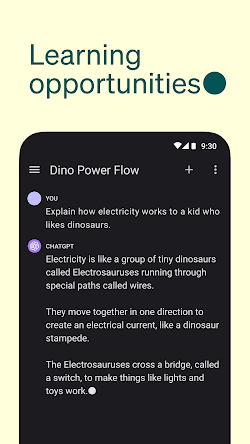
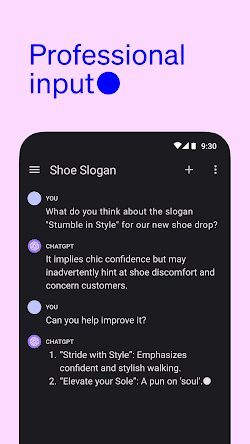
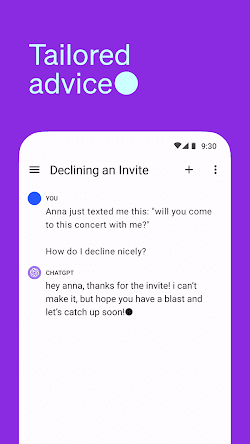
ChatGPT has the ability to generate creative and informative responses. It can provide explanations, summaries, opinions, suggestions, and even generate text in a specific style or tone. This versatility allows ChatGPT to address a wide range of user inquiries, making it a valuable tool for various applications such as customer support, content generation, and brainstorming.
Tips
Evaluate responses
ChatGPT may occasionally produce inaccurate or nonsensical answers. Use critical thinking to review and verify the generated responses.
Give feedback
If you encounter incorrect or confusing responses, providing feedback can help OpenAI improve the model's performance over time.
Pros & Cons
 1. ChatGPT can generate responses for a wide range of topics and queries, making it useful for various applications.
2. It excels at understanding and interpreting natural language input, providing contextually relevant responses.
3. ChatGPT maintains conversation continuity, remembering previous messages to generate coherent replies.
4. It can offer creative and informative responses, providing explanations, suggestions, and opinions.
1. ChatGPT can generate responses for a wide range of topics and queries, making it useful for various applications.
2. It excels at understanding and interpreting natural language input, providing contextually relevant responses.
3. ChatGPT maintains conversation continuity, remembering previous messages to generate coherent replies.
4. It can offer creative and informative responses, providing explanations, suggestions, and opinions.
 1. ChatGPT doesn't have access to current or real-time data, limiting its ability to provide up-to-date information.
2. It may occasionally generate incorrect or nonsensical responses, requiring careful evaluation of its outputs.
3. ChatGPT's performance relies heavily on the clarity and specificity of user instructions, which can sometimes be challenging.
1. ChatGPT doesn't have access to current or real-time data, limiting its ability to provide up-to-date information.
2. It may occasionally generate incorrect or nonsensical responses, requiring careful evaluation of its outputs.
3. ChatGPT's performance relies heavily on the clarity and specificity of user instructions, which can sometimes be challenging.
FAQ


Ratings