


 4.6
4.6




Microsoft Word App Info


Introduction
Microsoft Word is the cornerstone of the Microsoft Office suite, a powerful word processing application that has been the go-to choice for document creation, editing, and management for over three decades. Since its inception in 1983, Word has evolved into a sophisticated tool that supports a wide array of functionalities, from basic text editing to advanced collaboration and publishing features.
Features
 Wide compatibility
Word document format (.docx) is widely accepted and can be opened and viewed on almost all operating systems and devices.
 Rich template library
It provides a large number of templates, including resumes, reports, letters, etc., to facilitate users to quickly start the creation of documents.
Powerful editing function
Support text insertion, deletion, replacement and other basic operations, as well as advanced text formatting functions.
Diverse typesetting options
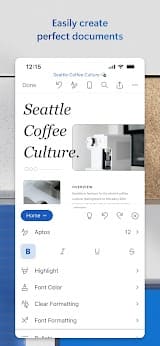
Users can adjust font, size, color, paragraph spacing, alignment, etc., to meet different typesetting needs.
Tables and Charts
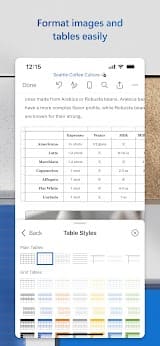
Word allows users to insert and edit tables and create charts and graphs to present data more visually.
Highlights
 Mail Merge
Allows users to create and print personalized messages, envelopes, and labels.
 Document check
Includes spelling and grammar checks, as well as style and format consistency checks.
Multi-language support
Word supports multiple language input and editing, convenient for multi-language users.
Easy to learn and use
Despite its powerful features, Word's interface design is intuitive and easy for new users to learn and use.
Tips
 Enter and edit text
Click another clear page and type message. You can utilize the arrow keys and erase keys on the keyboard to edit text, like moving the cursor, erasing characters, etc.
Design text
Select the text you need to arrange, then select the text style choices on the Start TAB, like strong, italics, underline, etc. Likewise, you can likewise set the size, text style tone, passage design, etc.
Embed content
Word upholds embedding an assortment of content, including pictures, shapes, SmartArt designs, diagrams, and that's only the tip of the iceberg. Select the Insert TAB, and afterward select what you need to embed. For instance, to embed an image, you can choose the Image choice and select an image from your PC to embed into your document.
Columnar typesetting
Word's columnar feature allows text to be divided into multiple columns for typesetting, which is very useful when creating contracts or brochures. Select the "Page Layout" TAB and then select the "Column" option to set parameters such as the number of columns and the width of the columns.
Table activity
Word has an implicit table editing capability, and clients can make and edit tables. You can embed an unfilled table by choosing the Insert TAB and afterward the Table choice. In the table, you can utilize the mouse to change the section width and line level, you can likewise utilize the easy route keys to change the request for the table and split the table.
Pros & Cons
 1. Document Checker: Helps users check for hidden metadata, personal information, and insecure macros in documents.
2. Reading Mode: Provide a simplified reading view, reduce interference, easy to read long documents.
3. Version history: Users can view the edit history of the document and restore to the previous version.
1. Document Checker: Helps users check for hidden metadata, personal information, and insecure macros in documents.
2. Reading Mode: Provide a simplified reading view, reduce interference, easy to read long documents.
3. Version history: Users can view the edit history of the document and restore to the previous version.
 1. Cost: Requires a subscription for full functionality, which can be a financial burden for some users.
2. Complexity: With so many features, new users might find Word overwhelming at first.
1. Cost: Requires a subscription for full functionality, which can be a financial burden for some users.
2. Complexity: With so many features, new users might find Word overwhelming at first.
FAQ


Ratings